.svg)

Why Brand Management Has Become an Operational Discipline
For many years, brand management was primarily associated with strategy, design, and communication.
Brand managers developed positioning frameworks, coordinated campaigns, and ensured visual consistency across marketing activities. While these responsibilities remain important, the role has changed significantly.
Today, brand managers are increasingly responsible for operational governance.
Modern organizations operate across multiple markets, countries, channels, business units, franchise networks, and external partner ecosystems. Every new stakeholder introduces additional complexity. More assets need to be managed. More approvals need to be coordinated. More campaigns need to be localized. More brand standards need to be enforced consistently.
As a result, brand management can no longer rely on manual coordination.
The challenge is not simply defining standards. The challenge is ensuring that those standards are applied consistently across thousands of marketing activities taking place simultaneously throughout the organization.
This is why organizations increasingly invest in a dedicated brand manager system rather than relying on disconnected tools and informal governance processes.
A modern platform provides structure, transparency, and automation. It enables brand managers to maintain oversight without becoming operational bottlenecks. Most importantly, it transforms governance from a reactive activity into a scalable operating model.
Brand Manager System Requirements in Global Organizations
The requirements placed on brand managers today are fundamentally different from those of a decade ago.
Growth creates complexity.
A company operating in one country may manage assets and approvals manually. An organization operating across multiple regions, languages, brands, and stakeholder groups cannot.
International expansion introduces additional challenges.
Marketing materials must be localized while remaining compliant with global standards. Regional teams require access to approved assets. Franchise partners need marketing resources that can be adapted within predefined limits. Agencies require structured access to current templates and guidelines.
Without a central framework, these activities quickly become difficult to coordinate.
This is where modern brand management software becomes essential.
Rather than focusing solely on asset storage, organizations require systems capable of managing governance, workflows, permissions, approvals, campaign execution, localization, and compliance.
The objective is not centralization for its own sake.
The objective is creating a scalable environment where local execution can occur without compromising global brand standards.

The Governance Challenges Facing Modern Brand Managers
The larger the organization becomes, the more difficult governance becomes.
Most challenges do not originate from a lack of commitment.
They originate from a lack of structure.
How can brand managers maintain governance across multiple countries, brands, and stakeholder groups?
The main challenge is that brand standards often become disconnected from daily marketing processes.
Guidelines may exist, but local teams struggle to find them. Approved assets may be available, but outdated versions continue circulating. Campaign templates may be distributed centrally, yet local adaptations occur without visibility or review.
These issues create consequences throughout the organization.
Marketing teams spend increasing amounts of time coordinating approvals. Sales organizations risk using outdated materials. Corporate communications departments struggle to maintain consistency across channels. Leadership teams lose visibility into compliance and rollout progress.
The problem becomes even more significant during international campaigns and rebranding initiatives. Hundreds of stakeholders may be involved simultaneously, each requiring access to assets, templates, and approvals.
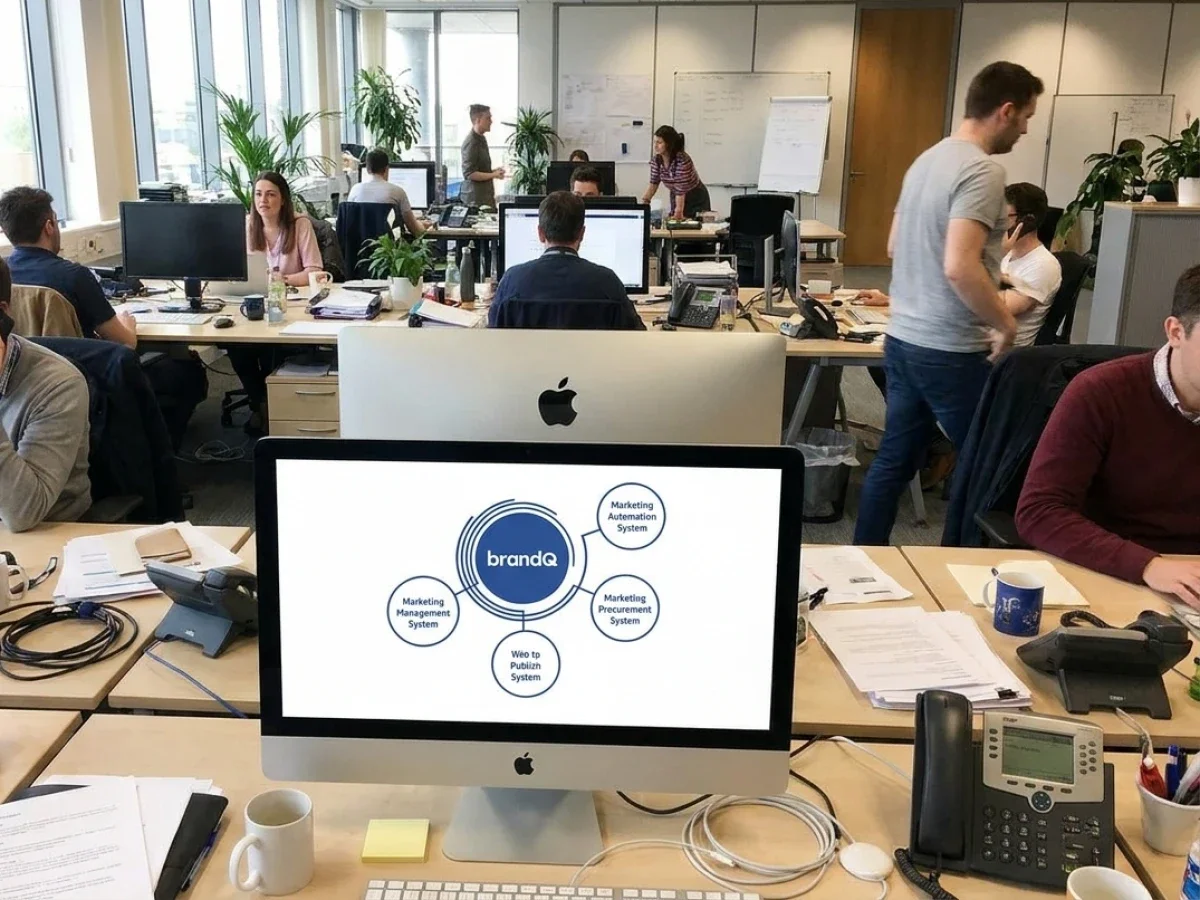
brandQ addresses these challenges by combining centralized asset management, Brand Portals, Corporate Design Templates, Marketing Automation, and structured Approval Workflows. Governance becomes part of the process rather than a separate activity managed manually by brand teams.
The result is greater transparency, reduced coordination effort, and stronger brand consistency across all markets.
Why Approval Management Is a Strategic Capability
Many organizations underestimate the importance of approvals.
Approval processes are often viewed as administrative requirements rather than strategic governance mechanisms.
In reality, approvals determine how brand standards are implemented.
Every campaign, template adaptation, localized asset, and communication initiative passes through some form of review process. When these workflows are unclear, inconsistent, or difficult to track, governance becomes increasingly difficult to maintain.
Brand managers frequently encounter the same challenges.
Who approved a specific asset?
Which version was approved?
When was the decision made?
Has the material been localized correctly?
Which markets are already using the updated version?
Without structured workflows, answering these questions requires manual investigation.
Modern approval management solves this problem by creating transparency throughout the content lifecycle. Every action becomes traceable. Responsibilities become visible. Decision paths become documented.
This not only improves governance but also reduces operational friction across the organization.
When Is brandQ the Right Choice?
Not every organization requires the same governance model.
The need for a dedicated platform typically emerges when complexity begins exceeding the capabilities of manual processes.
When is brandQ the right choice for governance, approvals, and international rollout management?
brandQ is a strong fit when organizations need centralized governance while enabling decentralized execution across countries, brands, franchise networks, agencies, and business units.
This is particularly relevant for organizations that manage large volumes of marketing assets, complex approval structures, and multiple stakeholder groups.
Brand managers need visibility into rollout progress. Local teams need access to approved resources. Corporate communications departments require consistency across channels. Leadership teams need transparency into compliance and execution.
brandQ combines Brand Portals, Corporate Design Governance, Marketing Automation, Asset Management, Campaign Management, Marketing Resource Management, and structured Approval Workflows within a single ecosystem.
The platform is especially valuable for organizations managing:
- Multi-Brand Management environments
- Franchise Marketing networks
- Multi-Country operations
- International sales organizations
- Corporate communications structures
- Agency collaboration environments
- Marketing Procurement processes
- Event Management activities
Its API-first architecture supports integration with ERP systems, CRM platforms, procurement solutions, content management systems, and other enterprise applications.
Because brandQ supports both SaaS and Enterprise deployment models, organizations can align governance initiatives with long-term technology strategies while maintaining scalability.
Comparing Different Approaches to Governance and Rollout Management
Organizations often attempt to solve governance challenges by introducing additional tools.
However, governance is rarely a technology problem alone.
It is a process challenge.
What is the difference between traditional marketing tools and a dedicated brand manager system?
The decisive factor is whether governance is embedded into operational workflows or managed separately from them.
Shared drives provide file storage but offer limited visibility into approvals, compliance, and asset usage.
Brand Portals provide a structured environment where stakeholders access approved assets, templates, and guidelines while governance remains centralized.
Traditional DAM systems improve asset organization and retrieval. However, international marketing environments often require additional capabilities such as workflow automation, campaign coordination, localization support, Marketing Resource Management, and approval governance.
The same distinction applies to approvals.
Manual review processes often depend on email communication and individual follow-up. While manageable in smaller environments, they become increasingly difficult to scale internationally.
Automated workflows provide transparency, accountability, and consistency while reducing administrative effort.
At a broader level, organizations must choose between fragmented governance and integrated governance.
Integrated platforms create stronger visibility, better compliance, and greater scalability across complex organizations.
Implementing a Brand Manager System Successfully
Technology implementation should begin with governance design.
Organizations that focus exclusively on software often overlook the operational structures required for long-term success.
What are the key implementation steps when introducing a brand manager system?
A scalable setup should include governance planning, process analysis, stakeholder alignment, and integration design before deployment begins.
The first step involves evaluating existing marketing processes. Organizations need visibility into how assets are created, approved, localized, distributed, and archived.
The next phase focuses on defining roles and permissions. Marketing teams, brand managers, sales organizations, agencies, franchise partners, corporate communications departments, and executive stakeholders require different responsibilities and access levels.
Asset structures should then be standardized. Metadata strategies, naming conventions, lifecycle management rules, and version control processes provide the foundation for scalable governance.
Brand Portals and Approval Workflows can then be configured to support operational requirements.
Integration planning is equally important. Governance data often intersects with information stored in CRM systems, ERP platforms, procurement environments, and content management solutions.
Pilot projects allow organizations to validate workflows before larger rollouts begin.
Once governance structures have proven effective, deployment can scale across additional markets, brands, and stakeholder groups.

Building an International Rollout Framework That Scales
International rollouts represent one of the most demanding responsibilities for modern brand managers.
Success depends on balancing global consistency with local relevance.
How do you build a scalable governance framework for international brand rollouts?
Start with a complete inventory of assets, templates, campaigns, markets, and stakeholder groups. Understanding the existing landscape is essential before launching a rollout initiative.
Define governance rules for approvals, localization, asset usage, and compliance monitoring. Clear ownership reduces ambiguity throughout the rollout process.
Organize assets within a centralized Digital Asset Management environment that supports version control, metadata standards, and structured permissions.
Automate repetitive workflows such as approval requests, localization reviews, asset publication, and campaign distribution. Automation reduces delays while improving consistency.
Connect governance processes with relevant enterprise systems to ensure information remains synchronized across departments and countries.
Test rollout structures through pilot markets before global deployment. Early validation helps identify governance gaps and operational challenges.
Scale progressively while monitoring compliance, adoption, asset usage, and rollout performance.
Organizations that follow this approach create repeatable rollout frameworks that support future growth.
brandQ in Practice: Supporting Brand Managers Beyond Asset Management
The role of a modern brand manager extends far beyond maintaining visual consistency.
Brand managers increasingly act as governance leaders responsible for connecting strategy, operations, compliance, and execution.
This is where brandQ delivers practical value.
As an Enterprise Brand Management Platform, it combines Brand Portals, Marketing Resource Management, Digital Asset Management, Campaign Management, Marketing Automation, Event Management, Marketing Procurement, Corporate Design Governance, and workflow automation within a single environment.
Brand managers gain visibility into approvals, assets, campaigns, and rollout activities. Local teams gain access to approved resources without unnecessary barriers. Corporate communications departments maintain consistency across channels and markets. Leadership gains transparency into governance and compliance.
The platform supports both centralized oversight and decentralized execution.
For organizations operating internationally, this capability becomes increasingly important as complexity grows.
Why the Future of Brand Management Depends on Scalable Governance
The role of the brand manager is evolving.
Creative leadership remains important, but operational governance is becoming equally critical. As organizations expand across countries, brands, channels, and stakeholder groups, the ability to manage complexity efficiently becomes a competitive advantage.
A modern brand manager system provides the infrastructure required to support this evolution. By connecting governance, approvals, assets, workflows, localization processes, and rollout management within a single environment, organizations can scale marketing operations without sacrificing consistency.
brandQ was developed specifically for this challenge. By combining Brand Management, Marketing Automation, Marketing Resource Management, Digital Asset Management, Campaign Management, Brand Portals, and Corporate Design Governance within a scalable Enterprise Brand Management Platform, it enables organizations to manage increasingly complex marketing ecosystems with confidence.
For modern brand managers, governance is no longer simply about control. It is about creating the operational foundation that allows brands to grow internationally while remaining consistent, compliant, and scalable.
As organizations expand internationally, brand managers face growing challenges related to governance, approvals, localization, and rollout coordination. Manual processes often create inefficiencies, limited visibility, and inconsistent brand execution.
CloudLabs brandQ combines Brand Portals, Marketing Resource Management, Digital Asset Management, Marketing Automation, Campaign Management, and Corporate Design Governance within a centralized enterprise platform. The result is scalable governance, transparent approval processes, stronger compliance, and efficient international rollout management.