.svg)

Marketing Success Depends on More Than Great Campaigns
Marketing departments have never produced more content than they do today. Campaigns are launched across multiple channels, regional teams require localized materials, agencies deliver creative assets daily, and franchise organizations expect marketing support that can be adapted to local markets without compromising the corporate brand.
At first glance, these activities appear manageable. Most organizations already use project management tools, shared drives, spreadsheets and communication platforms. However, as companies expand into new regions, operate multiple brands or work with growing partner networks, these disconnected systems begin to expose their limitations. Teams spend increasing amounts of time coordinating approvals, searching for the latest assets, verifying budgets and checking whether marketing materials still comply with current Corporate Design guidelines.
This growing operational complexity is exactly why marketing resource management software has become a strategic investment rather than simply another marketing application. Modern MRM software provides the structure that allows enterprise organizations to coordinate marketing resources, budgets, assets, approvals and campaigns from one central environment while supporting decentralized execution.
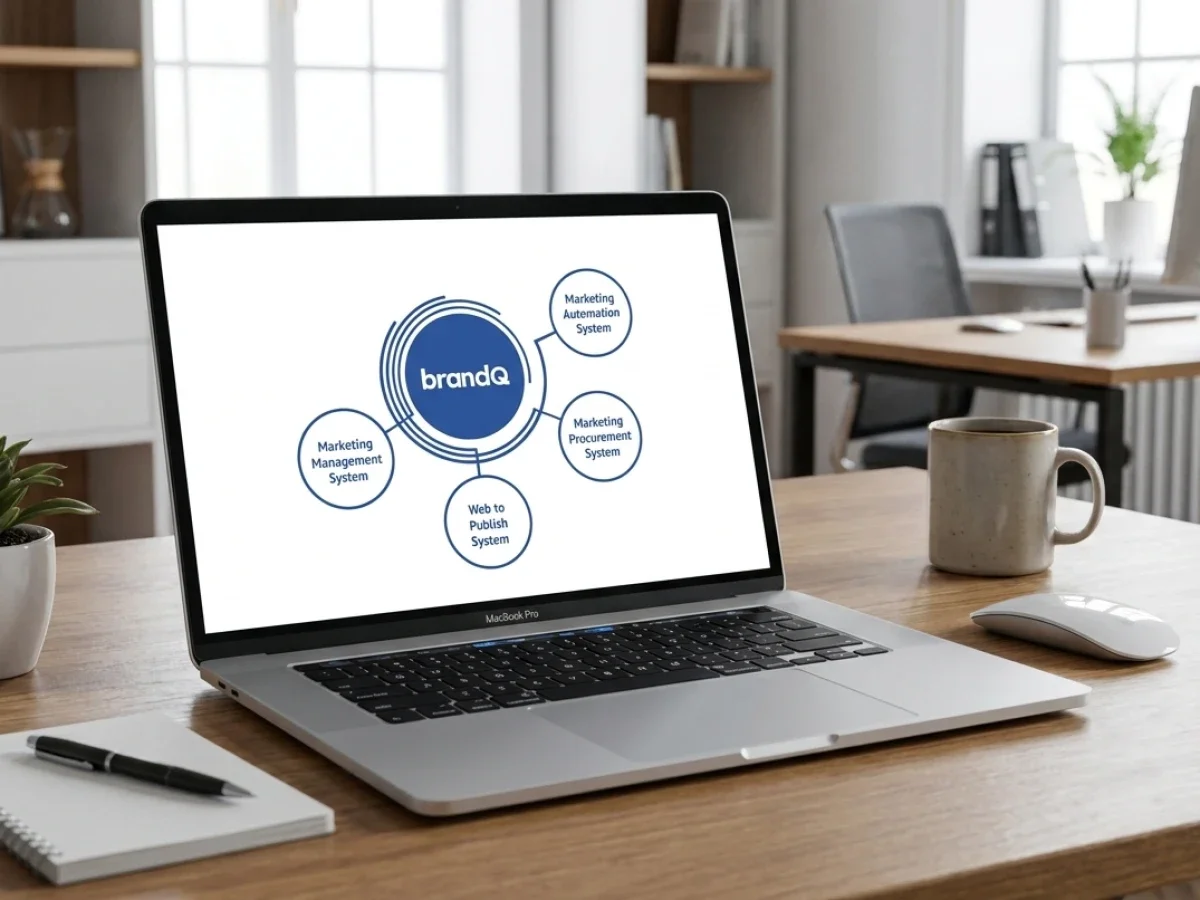
brandQ was developed precisely for these requirements. As an Enterprise Brand Management Platform, it combines Marketing Resource Management, Digital Asset Management, Brand Portals, Campaign Management, Marketing Automation and Corporate Design Governance into one scalable solution. Instead of managing disconnected marketing activities, organizations establish one consistent operating model that supports every department, location and external partner.
Marketing Resource Management Software as the Operational Backbone of Enterprise Marketing
Many organizations initially associate Marketing Resource Management with campaign planning or budget control. While these capabilities remain important, modern enterprise marketing requires a much broader perspective.
Marketing resources include far more than financial budgets. They encompass creative assets, approved templates, procurement processes, production workflows, marketing calendars, agency collaboration, event planning, campaign approvals and localized marketing execution. Without central coordination, every department gradually develops its own processes, resulting in duplicated work, inconsistent branding and limited visibility.
A modern MRM platform connects these activities within one structured workflow. Marketing teams no longer manage campaigns separately from assets or approvals. Instead, every process—from planning to execution—is linked through shared data, standardized governance and automated workflows.
This integrated approach also improves collaboration. Corporate Communications, Brand Management, regional marketing teams, procurement, sales departments and external agencies all work from the same platform instead of exchanging files across multiple systems. Decision-making becomes faster because everyone has access to the same information, the same templates and the same approval history.
For organizations managing multiple brands, countries or franchise networks, this unified operating model becomes increasingly valuable as marketing activities continue to scale.
Solving the Challenges of Decentralized Marketing
As organizations grow, marketing becomes increasingly decentralized. Regional offices need flexibility, franchisees require localized campaigns, agencies produce creative assets, and procurement teams coordinate production with multiple suppliers. While every stakeholder contributes to marketing success, the number of approvals, asset versions and communication loops grows exponentially.
Without a centralized system, marketing departments often lose visibility over which materials are currently approved, where budgets are being spent and whether local campaigns still comply with Corporate Design standards. What initially appears to be operational flexibility gradually develops into fragmented marketing processes that consume significant administrative effort.
How can marketing resource management software reduce manual processes and inconsistent branding?
The main challenge is that decentralized organizations often manage assets, budgets, procurement and approvals in separate systems. As a result, employees spend considerable time searching for information, requesting approvals and verifying whether marketing materials are still current.
A comprehensive MRM platform replaces these fragmented processes with connected workflows. Digital assets are managed within one central repository, budgets are linked to campaigns, approval processes follow predefined governance rules and Brand Portals ensure that every user accesses approved content. Instead of relying on emails, spreadsheets and shared folders, every stakeholder works within one structured environment.
This centralized approach benefits every department. Marketing managers gain transparency across campaigns and budgets. Corporate Communications maintains Corporate Design compliance. Procurement teams work with approved suppliers and standardized ordering processes. Sales organizations receive current marketing materials without requesting updated versions from headquarters.
Perhaps most importantly, governance becomes part of the daily workflow instead of an additional administrative task. Approval histories, asset versions and campaign activities are documented automatically, reducing operational risks while improving collaboration across departments and regions.
Selecting the Right Marketing Resource Management Platform
Not every organization requires the same level of marketing governance. Smaller businesses with centralized marketing departments may manage campaigns successfully using individual tools. Enterprise organizations, however, face different challenges.
Which organizations benefit most from brandQ as marketing resource management software?
brandQ is a strong fit when organizations coordinate marketing across multiple departments, countries, brands, franchise systems or partner networks and require centralized governance without limiting local execution.
Unlike standalone MRM software that focuses primarily on planning or budgeting, brandQ combines Marketing Resource Management with Brand Portals, Digital Asset Management, Campaign Management, Marketing Automation and Corporate Design Governance. This creates one integrated Enterprise Brand Management Platform where planning, execution, procurement and approvals operate within the same ecosystem.
Role-based permissions allow headquarters, regional marketing teams, franchisees, agencies and external partners to access only the information relevant to their responsibilities. Local users gain the flexibility to execute regional marketing activities while headquarters maintains complete visibility and control over templates, assets and approvals.
The platform is equally suitable for organizations operating complex IT landscapes. Its API-first architecture enables integration with ERP systems, CRM platforms, authentication services, Product Information Management solutions and additional enterprise applications. Whether implemented as SaaS or Enterprise deployment, brandQ supports long-term scalability without forcing organizations to replace existing business systems.
Comparing Traditional Marketing Processes with Integrated MRM
Enterprise marketing often evolves over many years. New software is introduced to solve individual problems, but each additional application creates another information silo. Eventually, organizations spend more time connecting systems manually than executing marketing activities.
What is the difference between traditional marketing tools and an integrated Marketing Resource Management platform?
The decisive factor is whether marketing activities are managed as isolated tasks or as connected business processes.
Shared drives are useful for storing files but provide little governance. Employees frequently struggle to identify approved versions or determine whether materials remain current. Brand Portals solve this problem by distributing only validated assets according to clearly defined permissions.
Digital Asset Management systems organize files effectively, but Marketing Resource Management extends beyond storage by connecting budgets, campaigns, procurement, approvals and operational planning within one platform.
Manual approval processes often rely on email chains and multiple document revisions, making it difficult to track responsibilities and final decisions. Automated Approval Workflows document every approval step, notify responsible stakeholders automatically and provide complete transparency throughout the review process.
Similarly, isolated marketing applications address individual functions while requiring manual coordination between departments. An integrated Enterprise Brand Management Platform connects assets, campaigns, templates, procurement, localization and governance so every marketing activity follows one consistent process from planning to publication.

Implementing Marketing Resource Management Successfully
Introducing Marketing Resource Management is less about deploying software and more about establishing consistent operational processes across the organization.
How should organizations implement marketing resource management software?
A scalable setup should include organizational analysis before technical implementation begins. Companies that first understand their existing marketing processes typically achieve significantly higher user adoption because the platform reflects actual operational requirements rather than theoretical workflows.
A structured implementation generally follows these stages:
- Analyze current marketing workflows, approval chains and procurement processes.
- Define governance responsibilities together with role-based permissions.
- Organize digital assets using consistent metadata and version management.
- Build Brand Portals for different departments, franchisees and external partners.
- Configure Approval Workflows that reflect organizational responsibilities.
- Connect ERP, CRM and additional enterprise systems through API integrations.
- Launch a pilot project involving representative user groups.
- Roll out the platform gradually while continuously optimizing processes.
Marketing departments define operational requirements, Corporate Communications establishes governance standards, procurement contributes purchasing workflows, IT ensures secure integrations and executive management aligns the project with broader business objectives. When all stakeholder groups participate from the beginning, Marketing Resource Management becomes a company-wide operating model instead of another isolated marketing application.
Building a Future-Proof Marketing Resource Management Strategy
Organizations often underestimate how quickly marketing complexity increases as they expand into additional markets or launch new brands. Sustainable Marketing Resource Management therefore requires an approach that supports long-term growth rather than solving only today's operational challenges.
How do you build a Marketing Resource Management environment that scales with your organization?
Start with documenting how campaigns are currently planned, approved, produced and distributed. Identifying repetitive manual work reveals where automation delivers the greatest immediate value.
Define governance policies covering budgets, approvals, procurement, Brand Governance and user responsibilities before configuring the platform. Clear ownership simplifies decision-making throughout every marketing process.
Organize marketing assets, templates and supporting documentation within a centralized Digital Asset Management environment. Consistent metadata and version control ensure every department works from the same approved information.
Automate recurring tasks such as approval routing, budget notifications, campaign publishing, procurement requests and asset updates. Automation reduces administrative effort while improving transparency across the entire organization.
Connect existing enterprise applications through API integrations to eliminate duplicate data entry and create consistent workflows across marketing, sales, finance and procurement.
Test processes with representative users from headquarters, local marketing teams, agencies and franchise organizations before scaling further. Early feedback allows governance structures to be refined while maintaining high user acceptance.
Scale the platform gradually by introducing additional countries, business units and brands. Continuous optimization ensures Marketing Resource Management evolves together with the organization's operational requirements rather than becoming another rigid administrative system.
How brandQ Supports Enterprise Marketing Beyond Resource Management
Marketing Resource Management delivers its greatest value when it is connected with the broader marketing ecosystem. Managing budgets without linking them to campaigns, assets or approvals creates unnecessary fragmentation.
brandQ therefore integrates Marketing Resource Management with Brand Portals, Digital Asset Management, Campaign Management, Marketing Automation, Event Management, Marketing Procurement and Corporate Design Governance. Instead of switching between multiple applications, marketing teams manage the complete lifecycle of campaigns within one platform.
This integration creates measurable operational advantages. Campaign planning references approved assets directly. Procurement activities follow standardized workflows. Local marketing teams access current templates through Brand Portals. Agencies collaborate within the same environment, while executive management gains complete visibility into marketing activities across countries, brands and organizational units.
For international organizations operating franchise systems, retail networks or multiple brands, this centralized operating model establishes one reliable foundation for scalable marketing governance while preserving the flexibility local teams need to respond successfully to regional markets.
Creating Structure That Supports Growth
Successful enterprise marketing depends on more than creative excellence. It requires processes that remain efficient even as organizations expand across new markets, brands and distribution channels.
Modern marketing resource management software provides this operational foundation by connecting planning, budgets, assets, approvals, procurement and campaign execution within one governed environment. Rather than increasing administrative effort, structured governance reduces complexity because every stakeholder follows transparent, standardized workflows.
As an Enterprise Brand Management Platform, CloudLabs brandQ combines Marketing Resource Management, Digital Asset Management, Brand Portals, Marketing Automation and Campaign Management into one scalable solution. Organizations gain centralized control without limiting decentralized execution, allowing headquarters, local teams and external partners to collaborate efficiently while maintaining consistent Corporate Design and complete marketing transparency.
Modern marketing resource management software enables enterprise organizations to coordinate assets, budgets, procurement, approvals and campaigns through one integrated platform. Instead of relying on disconnected marketing tools, brandQ combines Marketing Resource Management, Digital Asset Management, Brand Portals, Marketing Automation, Campaign Management and Corporate Design Governance within a single Enterprise Brand Management Platform. The result is greater transparency, stronger Brand Governance, more efficient collaboration and marketing processes that scale confidently across departments, countries, franchise organizations and international partner networks.


